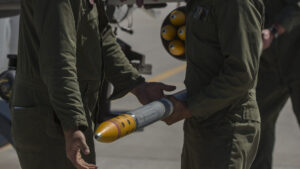
US clears nearly $2 billion in precision weapons for Saudi Arabia
The potential deal comes few days after Saudi Arabia and Iran-backed Yemeni Houthi traded fire, ending a four-year truce.
“We are already using artificial intelligence, image processing, machine learning and things like that. But we are also going more deep and deep in those areas,” the company’s general manager told Breaking Defense.
Watch experts discuss foreign influence risks, evolving DoD policy, and strategies for balancing security with scientific collaboration.
“Ukraine has been countering [Iranian drones] for years [and] all features of this defense are of interest to the Gulf,” Samuel Bendett, adviser at Center for New America Security, told Breaking Defense.
“To counter these [Iran’s] asymmetric threats, Gulf states are compelled to accelerate military modernization, prioritizing advanced air defenses like Patriot and THAAD upgrades,” said a retired Kuwaiti air force officer.
"We know each other very well. We know our collaboration extremely well, but to be in this bilateral framework is really important," UK Ambassador to Bahrain Alastair Long told reporters.
"The recent attacks have intensified debates on collective Gulf security, exposing critical air and missile defense gaps,” retired Kuwaiti air force Col. Zafer Al Ajami told Breaking Defense, adding that "political divisions may hinder a formal Arab-NATO."
Breaking Defense recently got an inside look at some major Turkish defense firms.
“Turkey is a very good choice for MRO, so we’re talking to them, and we are introducing our capability,” ASFAT CEO Mustafa Ilbas told Breaking Defense.
America’s allies in the Middle East are weighing options to avoid meeting the fate of the Afghani government, as regional scholars talk of the post Pax Americana era.